How long should a long form sales page be?
It is the kind of question that can take over a marketing meeting…
One person argues the sales page is too long because “nobody reads that much anymore.”
Someone else insists a long form sales page sells better.
Then both sides start looking for proof that their side is right—conversion studies, word-count data, and examples of successful short and long sales pages.
2,000 words? 5,000? 10,000?
Everyone is looking for the number that will settle the argument.
But there is no magic word count that makes a sales page more persuasive.
The rule is much simpler:
A long form sales page should be only as long as prospects need before they can say YES.
Some offers need more explanation, proof, and reassurance before a prospect feels ready to act. Others do not.
That means the sales page should give prospects what they need to make the decision, without adding copy that does nothing to help the sale.
In this article, you’ll learn what actually determines how much copy your sales page needs.
1. How Much Is at Stake?
Not every purchase asks the same thing from a prospect.
Buying a $29 ebook can be a quick decision. Signing up for a $1,500 self-paced learning course is different.
The more money, time, or risk involved, the more questions people are likely to have before they feel comfortable saying YES.
They may want to know:
- how the offer works,
- what results they can expect,
- whether it has worked for others, and
- what happens if things do not go as planned.
That is where a long form sales page can earn its place.
It gives the sales message enough room to answer those questions instead of rushing prospects toward the offer.
So when deciding how much copy a sales page needs, start here:
How big a decision are we asking the prospect to make?
The more that is at stake, the more work the sales page may need to do.
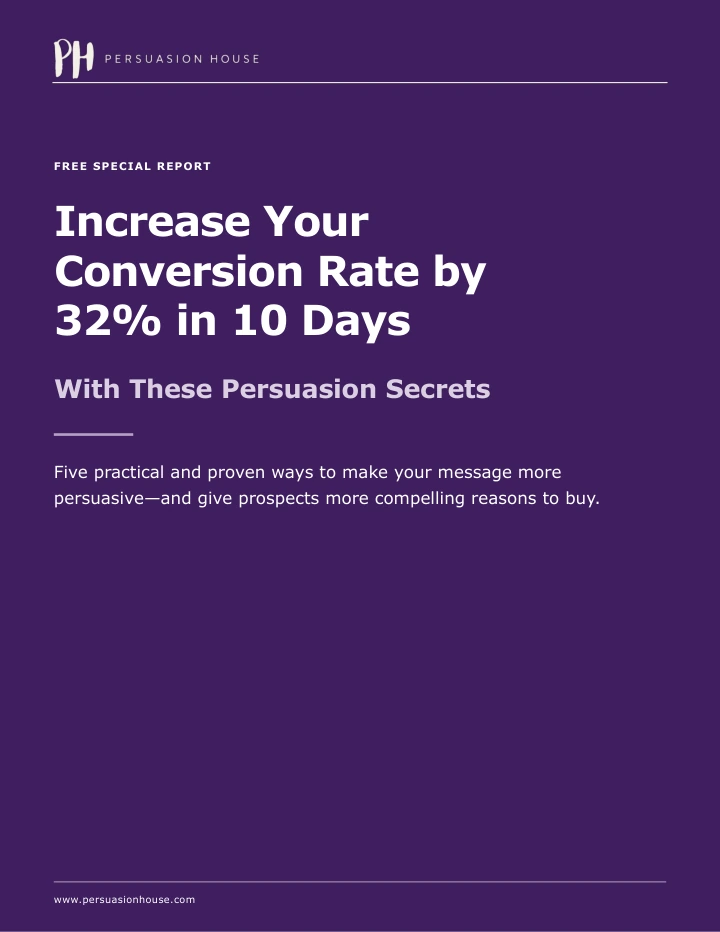
Discover 5 Persuasion Secrets to Increase Your Conversion Rate
Find out what makes interested prospects hesitate—and how to turn them into paying customers.
2. How Much Does the Prospect Already Know?
Some offers are easy to understand right away. Others need more explanation before the prospect sees the value.
If someone already understands the problem and knows what kind of solution they want, the sales page may not need to spend much time explaining it.
But if the offer is new, unusual, or hard to compare with other options, the prospect has more to figure out.
They may wonder:
- what the offer actually does,
- how it works,
- why it is different, and
- whether it is the right solution for their problem.
You need enough room to answer those questions properly.
If you try to fit everything into a short sales page, important questions may go unanswered.
A long form sales page gives you more room to explain the offer clearly and show prospects what they are getting.
That can make it easier for them to understand the offer, trust it, and move closer to buying.
3. How Much Doubt Is There?
Some offers are easy to accept at face value. Others make prospects stop and think.
Imagine a software company claiming its tool can cut reporting time by 70%. Or a consulting firm promising to help a business double the number of qualified leads it gets.
Those are big claims.
A prospect may immediately wonder:
- Can this really work for a business like mine?
- How did they get those results?
- What proof do they have?
- What happens if it does not work for me?
The bigger the promise, the more proof the sales page may need.
That could mean customer stories, case studies, real results, demonstrations, or a clear explanation of how the offer works.
Price can add another layer of doubt too. A prospect may believe the offer works but still wonder whether the result is worth the money.
If those questions are left unanswered, interest can quickly turn into hesitation.
A long form sales page gives you more room to answer the doubts that stand between the prospect and the sale.
The harder the offer is to believe, the more work the sales page may need to do before the prospect feels ready to act.
4. Make the Decision Feel Safer
A prospect may understand the offer and believe the promises, but still have a few questions before they are ready to buy. For example:
- What happens after they pay?
- How quickly can they get started?
- What kind of support will they receive?
- Is there a guarantee?
These details matter because every unanswered question leaves a little uncertainty behind.
When the sales page answers them clearly, the prospect has less to worry about. They know what to expect, what happens next, and what they are committing to.
That makes the decision feel safer.
But if those details are missing, even an interested prospect may stop and think, “I’m not sure yet.”
That is why cutting a sales page just to make it shorter can backfire. You may remove the exact information someone needed to feel comfortable buying.
A long form sales page gives you room to clear up those final doubts before asking for the sale.
But once prospects understand the offer, believe the promises, and feel comfortable moving forward, the sales page has said enough.
5. Will People Read a Long Sales Page?
Not every prospect will read every word. And they do not have to.
Some people will read from top to bottom. Others will scan the page and stop when something catches their attention.
Imagine someone looking at a $2,000 online course…
One prospect may already like the course but want to know whether the price is worth it. They may spend most of their time looking at testimonials, case studies, and what is included.
Another may be more worried about time. They may skip past the early parts of the page and look for details about how long the course takes, how the lessons are delivered, and whether they can learn at their own pace.
Someone else may still be unsure whether the course will work for them at all. That person may read the explanation of the problem, the method behind the course, and the proof much more carefully.
Same sales page. Different concerns.
That is one reason long form sales page can work so well.
It gives different prospects the chance to find the information that matters most to them.
But the long form sales page still needs to be easy to move through.
Clear subheads help people find the right section. Short paragraphs make the copy easier to read. Bullets can make key points easier to spot.
And a logical flow helps the prospect understand the sales message even if they do not read every line.
The goal is not to force everyone to read every word.
Rather, make sure the right information is there when a prospect needs it.
The Right Length Depends on the Prospect
The right length of a long form sales page depends on what the prospect needs before they feel ready to buy.
That sounds simple, but getting it wrong can be expensive…
You may launch the sales page, start sending traffic to it, and watch plenty of people arrive—but too few of them buy.
Meanwhile, the ads are still costing you money and your emails are still sending prospects toward a sales page that may not be doing its job.
Maybe the sales page was too short and left important questions unanswered… maybe it focused on the wrong things… or maybe the offer and proof were not strong enough to get prospects to say YES…
What makes this even more frustrating is that you may not know which part is costing you sales.
That is where Persuasion House can help.
We look at your prospects, your offer, and the decision you are asking people to make.
Then we build a long form sales page around what they need to understand, believe, and feel before they are ready to buy.
If you are about to launch a sales page—or already sending traffic to one—do not wait until it has already cost you more sales and money.